|
Moerdijk (in North Brabant) is the site of a major Shell petrochemical plant in the southern part of the Netherlands. MOERDIJK ETHYLENE CRACKER AND PLANT EXPANSIONShell Nederland Chemie BV decided to expand its existing plant at Moerdijk in the Netherlands in 1998. The project was completed in Summer 2000. The ethylene cracker had its capacity increased from 650,000t/yr to 900,000t/yr. The cost was Guilder 300 million(€136 million). The intention was to improve the efficiency of the plant in order to improve Shell's competitiveness in the ethylene and propylene derivatives market. The plant's ethylene cracker expansion uses Stone & Webster's proprietary Advanced Recovery System technology. In 1999, MDC Technology of the UK was ordered to install five real-time process information systems in Pernis and Moerdijk. The total contract was worth $1.3 million. These are to integrate data from the existing TDC3000 systems. COGENERATION ELECTRICITY SCHEMEThe Moerdijk plant contains a successful cogeneration scheme. This is an important part of many plants in the Netherlands, which now generates about 35% of its electricity needs from such schemes. The cogeneration plant is essentially an enormous waste-incineration plant capable of burning 600,000t/yr to produce two million tonnes per year of high-pressure steam for the complex. Siemens supplied the power plant with a rated output of about 339MW. STYRENE MONOMER AND PROPYLENE OXIDE CAPABILITYShell and BASF have built a factory in Moerdijk as part of a 50/50 joint venture. It has capacities of 565,000t/yr styrene monomer (SM) and 250,000t/yr propylene oxide (PO), and took a record two years to build. The joint venture responsible is called Basell. It will be responsible for both the Moerdijk plant and another $500 million SM/PO facility in Singapore. This is next to a third SM/PO plant that is wholly owned by Shell (having bought out Mitsubishi's minority share in September 1999). The site also has an existing Shell polystyrene facility built in the 1970s. The older SM/PO facility has a nameplate capacity of 440,000t/yr of styrene and 220,000t/yr of propylene oxide. By siting the plants next to each other, Shell hopes to realise synergies. The plant cost about $500 million. It uses Shell's proprietary peroxidation technology, which the company regards as cutting edge. Although the plant had some running problems, the company claimed to have met production targets. This is despite struggling to reach full capacity because of unscheduled stoppages. The propylene oxide is likely to be used for the Moerdijk production of polyether polyols by Shell. Styrene is a starting material for plastics. Most common products are polystyrene and styrene copolymers, such as acrylonitrile-butadiene-styrene (ABS), styrene acrylonitrile (SAN) and acrylonitrile-styrene acrylic ester (ASA). Important end-user industries for these products are the packaging business, the electronics and electrical industries, automotive construction and the building sector. Propylene oxide (PO) is one of the most important links in the value-added chain, with polyurethane at the top. These versatile plastics are used, for instance, in the automotive industry, in the construction sector, for shoe soles, sports equipment and upholstered furniture. SHELLShell is one of the biggest oil & gas giants in the world, with significant additional petrochemical operations. As with many oil companies, Shell has been concerned with achieving economies in its operations. However, these efforts have particularly focused on the chemical arm. It took a $4.5 billion exceptional charge in the last quarter of 1998 in order to restructure. This involved cutting about 1000 jobs at Shell's chemical sites at Moerdijk, Pernis and Breda. The Amsterdam research centre was also affected. The company will sell the remainder of the propylene oxide, as well as its entire share of the Moerdijk plant's styrene output, since it no longer makes polystyrene in Europe. The company sold its European polystyrene business to Nova for $185 million, plus $30 million in working capital. The divestment will be completed in the last quarter of 2000. |
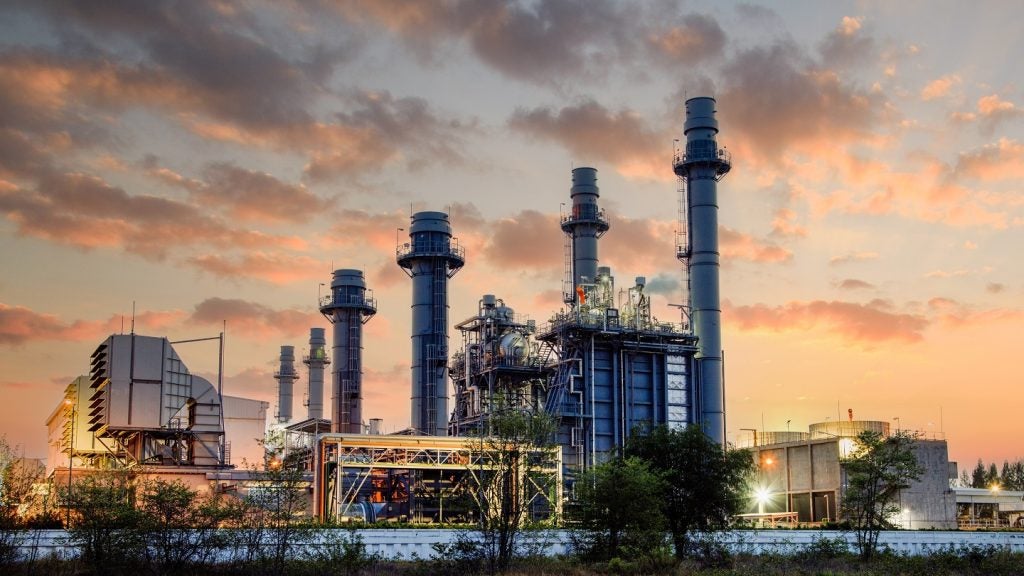
![]() Expand ImageThe ethylene cracker |
![]() Expand ImageThe Moerdijk plant contains a successful cogeneration scheme. | |
![]() Expand ImageMoerdijk (in North Brabant) is the site of a major Shell petrochemical plant in the southern part of the Netherlands. |