| Bandar Imam 2 | ||
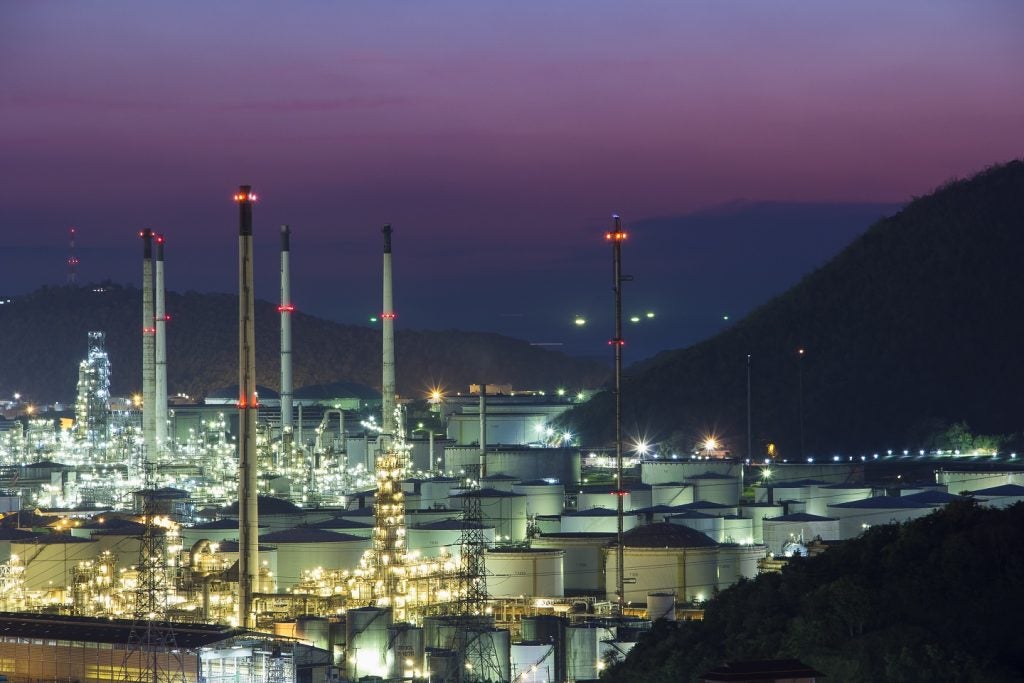
View of the Bandar Iman Plant. |
||
| BASF-YPC Integrated Petrochemical Complex, Nanjing | ||
BASF-YPC is a 50-50 joint venture between BASF and SINOPEC. The JV operates a steam cracker (600,000tpa ethylene) and nine downstream plants on its 220ha site in Nanjing, China. BASF-YPC will produce about 1.7 million tpa of high quality chemicals and polymers for the rapidly growing Chinese market. |
Ground breaking at the BASF-YPC integrated petrochemical complex took place in September 2001. Mechanical completion was achieved at the end of 2004 with commercial operation beginning in June 2005. |
|
| BASF/Dow/Solvay HPPO Plant | ||
The BASF site in Antwerp has transformed itself over the last 40 years into the largest integrated chemical production site in Belgium and the second largest Verbund site of BASF Group. Photo: BASF - The Chemical Company, 2006 |
Modern jogging shoes aren't a starter without polyurethane. Adidas relies on this material. Thermoplastic polyurethane cushions, supports, and picks up the pace. Photo. BASF - The Chemical Company, 2006 |
During 2003 Dow and BASF began a joint research programme to develop and commercialise an HPPO process. Photo. BASF - The Chemical Company, 2006 |
| Baytown | ||
The company became active in Baytown in the 1970s, and has multiplied its production capacity ten-fold since then. |
||
| CSPC Petrochemical Complex, | ||
During May the biggest and heaviest piece of equipment of the CSPC Nanhai Petrochemicals Project arrived at the material offloading facility. Imported from Japan, the propylene rectifier weighs 1,240t and is 94m long and 6.9m in diameter. It is used to make polymer grade propylene. |
Construction activity begins as the first pile is driven into the ground in May 2003. |
Mass cut fill activities on the site of the CSPC petrochemical complex. The complex is due for completion in 2005. |
The construction and foundation ceremony was held on the project site in November 2002. |
CSPC will be located in Daya Bay Huizhou Municipality, Guangdong, PRC. |
|
| Deer Park (Shell) | ||
Shell Chemical has decided to combine two planned expansions at its Deer Park, Texas, olefins plant into one large debottlenecking project. This is part of its wider scheme to enhance its production facilities in the southern USA. |
||
| Dushanzi Integrated Refinery and Petrochemicals Complex | ||
Emerson Asia Pacific has been awarded the contract for the refinery control systems and process technology at the Dushanzi complex. |
Emerson control valves will aid the Dushanzi plant in being highly efficient. |
There are 2,500 Fieldvue metres to be installed by Emerson to aid in the management of its control valves. |
Emerson will provide the technology to give the Dushanzi refinery exceptional control over its processes. |
The Dushanzi refinery is situated in the northwest China, towards the border with Kazakhstan. |
|
| Eurochem Technologies Natural Gas-to Petrochemical | ||
Based in Denmark, Haldor Topsoe's focus is on research and development of heterogeneous catalysts and engineering process plants. The company operates in the areas of fertilisers, heavy chemicals, petrochemicals, refining and environmental protection. Haldor Topsoe is 50% owned by Snamprogetti. |
Based in Italy, Snamprogetti has designed and constructed more than 900 process plants all over the world. As the international engineering and construction contractor of the Eni Group, Snamprogetti has had wide experience of delivering projects in Nigeria. (Picture courtesy of Eni Group). |
|
| Exxon Mobil Petrochemical Complex, Jurong Island | ||
A number of executives and directors were in attendance at the ground breaking ceremony for the new plant. |
Georges Grosliere, project executive, ExxonMobil Asia Pacific Pte Ltd, explaining the exhibits at the groundbreaking ceremony to Prime Minister Lee Hsien Loong. |
The site of the new petrochemical plant in Jurong Island. |
Jurong Island is home to about 80 different refineries and petrochemical concerns. |
Jurong Island, where the new plant will be built, used to be made up of seven islands. These have been joined together and now the island in conjunction with the land side provides a natural port ideal for industry and export. |
|
| Fujian Refining & Petrochemical Company | ||
At the unveiling ceremony in the Great Hall of the People. From left to right: Steve Simon, Director & Senior Vice President, Exxon Mobil Corporation; Abdallah S Jum'ah, President & CEO, Saudi Aramco; Ali Al-Naimi, Minister of Petroleum & Mine |
Saudi Arabia's Saudi Aramco will supply crude oil for the to the joint venture project. This will significantly enhance the competitiveness of the project and help ensure world-class performance. |
|
| Gebeng | ||
Acrylic Acid Plant near Gebeng under construction |
Verbund site |
|
| Hull | ||
The vinyl acetate plant will come into production just as an agreement for ENI to supply BP Amoco with vinyl acetate from North Italy expires. The new Hull facility will also lead to one of BP Amoco's plants closing. |
||
| Jamnager | ||
|
||
| Jinshan | ||
|
||
| Jose Sincor Project, | ||
The Jose Petrochemical Complex has a sulphur recovery plant but further plants are due for construction in the near future. |
Sulphur in its raw crystalline state; the plant incorporates three sulphur recovery units. |
Sulphur recovered from petroleum is usually marketed as pellets. |
Map of Venezuela; the petrochemical complex is located on the Caribbean coast near Anzoategui. |
||
| JUPC Petrochemical Complex | ||
The Jubail United Petrochemical complex is being built close to Petrokemya, a wholly owned subsidiary of Sabic. Petrokemya, which has been operational since 1985, is one of the largest manufacturing sites in Al-Jubail, Saudi Arabia. |
Sabic and Linde's joint research effort resulted in the development of the Sablin technology used in the production of linear alpha olefins (LAO). |
|
| Kazakhstan Petrochemical Complex | ||
The General Director of SAT & Company, Nurlan Abduov presents to the Head of State the plans for the development of KPI's integrated gas-based petrochemical complex. |
Kazakhstan has enjoyed a steady growth of its GDP for the last five years, with year-on-year increases of over 9%. The government plans to double its GDP in 2008 compared with 2000. |
The Republic of Kazakhstan is a large landlocked country in Northern and Central Eurasia. Its territory is over 2.7 million square kilometres and is bigger than that of all of Western Europe. |
| Kerteh (Optimal Olefins) | ||
Cracking Process Diagram for Kertih. |
||
| Medicine Bow Methanol Project, | ||
The Medicine Bow Methanol project is situated in Wyoming. |
Wyoming is a coal-rich state in the US which has the potential to produce high quality gasoline and diesel. |
The Medicine Bow methanol project is using technology from several providers. |
The state of Wyoming. |
The chemical structure of coal, which can be converted into liquid fuels and chemicals. |
|
| Mesaieed (Qatar Vinyl) | ||
| National Chevron Phillips | ||
Saudi Chevron Phillips Company (SCP) is a joint venture that owns and operates an aromatics facility in Al-Jubail. During 2004 it was announced that the aromatics complex would receive and investment of $1.2bn to expand the existing aromatics plants and add new production facilities. |
As well as a presence in Saudi Arabia, Chevron Phillips Chemicals also has interests in Qatar where it holds a 49% stake in Q-Chem a world-scale petrochemical complex. The joint venture partner is Qatar Petroleum. |
|
| Nghi Son Petrochemical Refinery Complex | ||
The country's second-largest oil refinery will be built in Thanh Hoa Province by a joint venture between the Viet Nam National Oil and Gas Corp. Kuwait Petroleum International and Japanese companies Idemitsu Kosan Corp and Mitsui Chemicals Inc. |
During April 2008 the joint venture contract to establish Vietnam's second refinery was signed in Ho Chi Minh City. |
|
| Octal Petrochemical | ||
The construction of the Sapphire plant began in late 2006 and the plant will open in mid-2008. |
Dimethyl terephthalate is reacted with MEG to produce PET in the industrial process at the new Octal plant. |
MEG (mono ethylene glycol) is an important constituent of the production process of PET. |
The Octal Petrochemicals plant is in the Salalah free zone in the south of Oman. |
The product PET will be marketed as PET for bottles and also as colourless APET sheet. |
|
| Osos Petrochemicals Polybutylene Terephthalate Production Facility, Yanbu | ||
The FEED contract was awarded in February 2007; Mubarak A Al-Khater, MD of Osos Petrochemicals and Stephen Culshaw, Director, Commercial Operations, Foster Wheeler Energy Limited, at the contract signing. |
The chemical structure of PBT gives it a number of versatile properties. |
Electrical insulation for home and industry also uses PBT. |
Automotive components are also widely made from PBT and Osos will be supplying products for this market. |
A map of Saudi Arabia showing the position of Yanbu, one of two main industrial cities, twinned with Jubail. |
|
| PetroChina Fushun Petrochemical Company | ||
PetroChina is one of the major producers and distributors of chemical products in China. Most of its chemical plants are integrated in refining. By December 2006 PetroChina said that it was producing 2.63m tpa of ethylene, accounting for 26.6% of the national output. |
PetroChina says that it is the largest oil and gas producer and distributor in China. During 2007 PetroChina won wide recognition across international capital markets for its corporate governance and profitability. |
|
| PetroChina Sichuan Petrochemical Integrated Petrochemical Complex | ||
PetroChina Company is one of the largest oil companies in the world. Its core businesses are exploration and production, refining, and chemicals production and marketing. |
During 2004 PetroChina completed a feasibility study and environmental impact report for the planned ethylene plant. The project was approved by the State Environment Protection Agency Administration of China on 14 April 2005 and the National Development and Reform Commission on 13 December 2005. |
Upon completion, the plant will raise production of petrochemicals such as polyethylene to effectively meet heavy demands in the under-supplied south-western region and strengthen PetroChina's position in the petrochemicals market. It will also help boost the local economy and provide employment opportunities. |
| PetroRabigh | ||
World-class domestic refineries stretching from the Arabian Gulf to the Red Sea maintain a reliable supply of more than a million barrels per day of products to meet the needs of domestic and international markets. At the same time Saudi Aramco's environmental protection planning has increased in line with its growing responsibilities in the national and international oil industry. Environmental concerns are reflected in system modifications throughout refining and distribution operations. |
Saudi Aramco's operations span the globe and the energy industry. Said to be the world leader in crude oil production, Saudi Aramco also owns and operates an extensive network of refining and distribution facilities, and is responsible for the gas processing and transportation installations that fuel Saudi Arabia's industrial sector. The company has discovered and holds about one-quarter of the world's proven conventional oil reserves – approximately 261.8 billion barrels. |
From left, Sumitomo Chemical president Hiromasa Yonekura, Saudi Minister of Petroleum and MineralResources Ali I. Al-Naimi and Saudi Aramco president and chief executive officer Abdallah S. Jum'ah officiate at the groundbreaking ceremony for the PetroRabigh project on March 19, 2006. |
The polypropylene production could approach 700,000t per year. |
Ethylene glycol will be one of the products from the integrated complex. |
|
| PKN Orlen Petrochemicals Plant | ||
Plock is a major industrial centre in Poland and will be the site of the new PKN Orlen paraxylene complex. |
Paraxylene is a valuable petrochemical feedstock, used in the fabrication of polyesters and for the production of PTA. |
PKN Orlen is one of the largest petrol retailers in Europe with over 12,700 outlets. |
The new PKN Orlen paraxylene unit should be completed by 2009. |
PKN Orlen is the largest company in Central Europe and has sales of $20bn per year. |
|
| PMD Ethylene and Derivatives Complex, Al-Jubail | ||
Advantaged feedstock and good access to growing markets has meant that Saudi Arabia has become an important location in the development of petrochemical projects across the Middle East. At present, significant sums of money are being invested in Saudi Arabia by local as well as international companies to develop petrochemical production capacity. |
Linde had responsibility for defining the final outlook for the project, producing bankable feasibility studies and coordinating technical providers and product marketers. |
|
| QChem II | ||
The MIC development for Q-Chem II will include a 350,000mtpa HDPE plant. |
Ethylene feedstock will be piped in from Ras Laffan, from a new 1.3 million mtpa ethylene cracker. |
The new Q-Chem II project is truly integrated, using feedstock piped from a plant at Ras Laffan to supply several ventures at Mesaieed. |
Mesaieed Industrial City is south of the Qatari capital city of Doha. |
The Q-Chem I project was a success, with capacity to produce sulphur, hexane and HDPE. |
|
| Ras Tanura Integrated Petrochemical Complex | ||
Ras Tanura will be the location for what is said to be the world's largest integrated petrochemical complex. |
The Ras Tanura Integrated Project is set to provide employment for more than 4,000 people and allow Saudi Arabia's chemical sector to become a "key enabler of many other future investment in the Kingdom. |
|
| Reliance Petroleum Ltd | ||
Reliance Petroleum Ltd (RPL) is setting up a greenfield petroleum refinery and polypropylene plant in a Special Economic Zone in Jamnagar in the state of Gujarat in western India. |
Metso Automation is supplying valves and actuators for Reliance Petroleum's polypropylene plant. The company specialises in automation and information management application networks and systems, field control technology and life cycle performance services. |
|
| Rio de Janeiro Petrochemical Complex (Comperj) | ||
The Rio de Janeiro Petrochemical Complex (Comperj) is being built in the municipalities of Itaborai and Sao Goncalo. The proximity of the site to Petrobras' existing complex in Rio de Janeiro, the availability of labour and proximity to the port were factors in deciding on the location. |
Petrobras says that it supplies almost the entire demand of the Brazilian market for petroleum by-products. As well as meeting growing demand, the company says that it also has to face the challenge of adapting its refineries to use available feedstock, reducing the dependence on imports. |
Petrobras has designed a number of aspects for Comperj that will reduce its impact on the environment. These include a unit to treat industrial effluents, rain water and acid water. Once purified this water will be reused countless times within the complex instead of being discharged into the rivers. |
| Riopol Gas-Based Petrochemical Complex | ||
Unipar is one of the shareholders in RioPol. Unipar's operations are concentrated in the Rio-Sao Paulo region of Brazil. This region give the company good access to its consumer market and raw material suppliers. The new gas-chemical complex will be in close proximity to Unipar's production plants. |
Attending a major industry plastic fair in Brazil, Rio Polimeros has started its marketing campaign. Completion of the chemical complex will mean that Brazil's dependence on imported polyethylene will be reduced. |
|
| Saudi Kayan Petrochemical Company | ||
Saudi Arabia’s Sabic announced that it had become a ‘strategic partner’ in the formation of a company called Saudi Kayan Petrochemical Company (Saudi Kayan). The new company is headquartered in Riyadh, Saudi Arabia. |
Saudi Kayan is building a 4m tpa petrochemical complex. Located in Al Jubail Industrial City, the complex is due to become operational during 2009. Products will include ethylene, propylene, polypropylene, ethylene glycol and butane-1. |
|
| Secco Petrochemical Complex | ||
Secco invested $2.7 billion to build its petrochemical complex which is centred around a 900,000t/yr cracker based on naphtha feedstock. |
The Shanghai Chemical Industry Park (SCIP) lies on the north coast of Hangshou Bay. It has a total planning area of 29.4km². The site is the first industrial zone that is specialised in the development of petrochemical and fine chemical businesses. SCIP has good road, rail and air links. |
|
| Sharq Third Expansion Project, Jubail | ||
As well as the offsites and utilities contract, Foster Wheeler is also managing all the engineering procurement and construction contractors and providing the management, coordination and control of all phases of the expansion project. |
The Sharq expansion project will add a total capacity of 2.8 million tpa to Sabic's total output and at the same time enhance Sharq's position as the world's single largest producer of ethylene glycol. |
|
| Shell Eastern Petroleum Ltd (SEPL) | ||
Shell already has a strong presence in Singapore, indeed Singapore is the main centre for Shell’s petrochemical operations in Asia Pacific. Among the many assets operated there is the wholly owned Shell company, Seraya Chemicals. Credit: Shell |
Seraya Chemicals is located on Singpore’s Jurong Island. This company produces a number of materials including styrene monomer and propylene oxide. The island will also be home to the proposed 750,00tpa monoethylene glycol plant which is expected to become operational in 2009. Credit: Shell |
|
| Shuaiba (PIC) | ||
Shuaiba, in Kuwait, is a major petrochemical development centre. It has been the focus of more than one project by Union Carbide and Petrochemical Industries Co (PIC) over a period of years, as well as activity by other companies. |
Petrochemical Industries Corporation (PIC) is a state owned petrochemical corporation. Its intermediate owner is the Kuwait Petroleum Corporation (KPC). It has about 1,200 employees. |
|
| Sinopec Yangzi Petrochemical Co Ltd, | ||
Technip is responsible for the basic design and engineering of the YPC plant in Nanjing. |
Nanjing is one of China's industrial capitals, making it suitable for siting projects in the petrochemicals industry. |
Carbon monoxide will be separated out by a condensation process, with the YPC plant producing 25,000m³/h of the gas. |
Gas streams from steam reforming produce methane as a feedstock for syn gas. |
||
| Sipchem Methanol, BDO, THF and GBL Plants, | ||
Jubail, Saudi Arabia, is the location of Sipchem's joint venture petrochemical complex. This industrial city is home to major global chemical manufacturers. The location was to be an important factor in attracting both public and private interest. |
The production plants of both IMC and Gacic will be linked into the advanced network of distribution that has been developed at the Jubail Industrial Estate. Much of Jubail's modern port and distribution infrastructure has been put in place as a result of the presence of the major producer Sabic. |
|
| Tuban Petrochemical, East Java | ||
The Tuban petrochemical facility is in East Java. |
The xylenes (ortho and para) are an important product for the aromatic plant. |
Over 300,000t per year of Benzene is also produced at the plant. |
The toluene produced is a chemical feedstock and solvent. |
Polyester fibre is produced from terephthalic acid, which relies on a supply of paraxylene produced at Tuban. |
|
| Yanbu (Yanpet) | ||
Yanbu Complex |
||
| Yangzi | ||
The Chinese government is eager to see domestic ethylene production increase so that the country's imports are reduced. |
||
| Yeosu | ||
BASF is expanding its plants at Yosu and Ulsan in South Korea. The expansion was announced in March 2000, and the whole of the complex will go into commercial production between 2002 and 2004. |
||